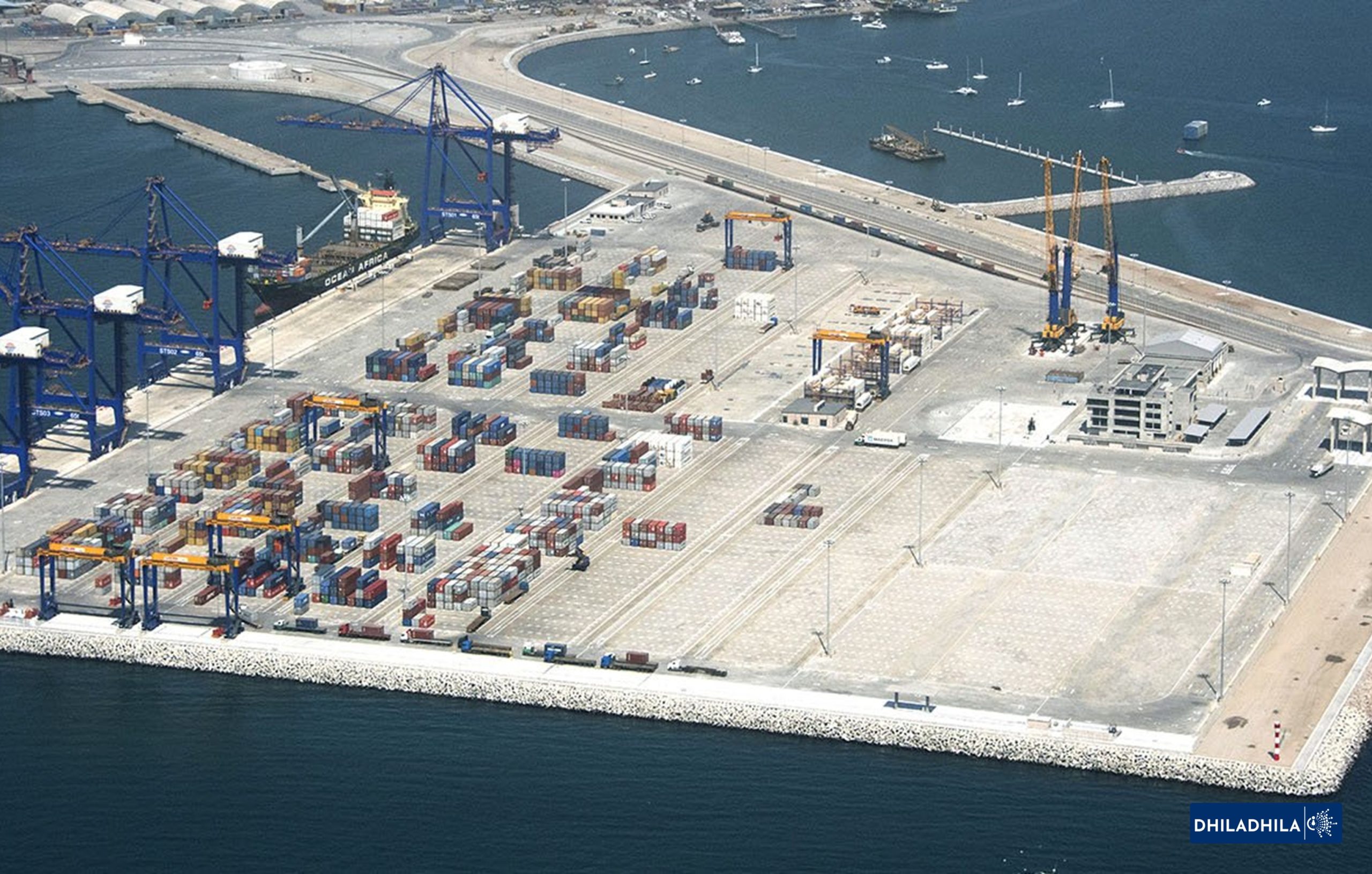
For decades, the logic of Southern African logistics was dictated by a single gravitational force: Durban. The sheer scale of South Africa’s primary port made it the default entry point for goods destined for Gauteng, Gaborone, and Lusaka. But in the boardrooms of Windhoek and the logistics parks of Walvis Bay, a quiet but decisive structural shift is underway.
The narrative is no longer about Namibia absorbing overflow; it is about Namibia capturing the primary flow.
Data from the Trans-Kalahari and Walvis Bay-Ndola-Lubumbashi Development Corridors suggests that what began as a risk-mitigation strategy for regional importers is hardening into a permanent operational preference. For Namibian logistics firms, warehousing operators, and support service SMEs, this represents a generational opportunity to transition from a transit economy to a logistics super-hub.
The Efficiency Dividend The driving force behind this pivot is not purely capacity, but predictability. In modern supply chain management, certainty trades at a premium over volume.
Current operational metrics from Namport indicate a vessel turnaround time that is increasingly competitive by global standards. For a haulier servicing the Botswana or Zambian mining sectors, the math has changed. The “Walvis Bay Pivot” offers a streamlined customs environment and a road infrastructure network – specifically the B2 and B1 arteries – that remains among the best maintained in the hemisphere.
“We are seeing a re-evaluation of total landed cost,” notes a senior logistics analyst based in Windhoek. “When you factor in demurrage, road delays, and inventory holding costs associated with traditional east-coast routes, the Walvis Bay corridor is proving to be the leaner, faster option for high-value cargo.”
The Copperbelt Connection The strategic genius of Namibia’s positioning lies in its northern reach. The expansion of the Walvis Bay-Ndola-Lubumbashi Development Corridor (WBNLDC) has effectively linked the Atlantic Ocean to the heart of the African mining belt.
This is not just a transit route; it is an industrial lifeline. For Namibian businesses, the opportunity extends beyond toll fees and fuel levies. There is a rapidly expanding market for “dry port” services, bonded warehousing, and cold-chain logistics facilities in towns like Grootfontein and Otjiwarongo, which are transforming into critical staging posts.
SME Opportunities in the Value Chain For the local private sector, the macro-economic shift translates into tangible micro-economic demand. The “pivot” requires an ecosystem to sustain it. We are observing a spike in demand for:
- Specialized Fleet Maintenance: High-tech servicing for long-haul fleets.
- Customs Brokerage: Specialized clearing agents who understand both SACU and SADC protocols.
- Last-Mile Tech: Digital tracking solutions that offer clients real-time visibility from the quayside to the customer.
The Strategic Outlook The trajectory is clear. Namibia is moving from a passive participant in regional trade to an active architect of SADC’s logistics future. The Walvis Bay Pivot is not a temporary anomaly driven by external inefficiencies elsewhere; it is a structural realignment driven by Namibian capability.
For the investor and the industrialist in Windhoek, the message is unequivocal: the gate is open, and the region is walking through.
Sources
- Namport (Namibian Ports Authority) – Annual Report & Cargo Statistics (2024/2025).
- Walvis Bay Corridor Group (WBCG) – Strategic Plan & Cross-Border Efficiency Data.
- African Development Bank (AfDB) – Southern Africa Logistics & Transport Indicator Report.
 WhatsApp for a Google-Ready Website