
By Dhiladhila Magazine · Issue 08
A grant you can only apply for online rewards the founders a programme can actually reach, and quietly filters the rest.
The N$7.5 million survival grant has no queue and no paper form. StartUp Namibia runs the whole process online, and a founder hears about it, applies for it and is judged on it through a screen. The programme set a short window, with applications open on 2 September and closing on 16 September 2020, and pointed applicants to a competitive online call. Access begins with a connection and a feed.
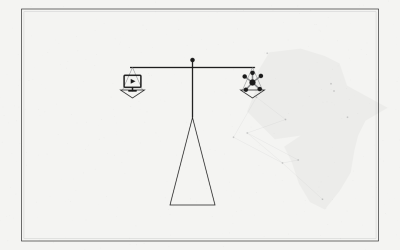
That makes the grant a test of digital reach as much as of business merit. The N$15,000 goes to strong applications, but only strong applications that arrive, and arriving depends on seeing the announcement, understanding the deadline and completing a form inside a fortnight.
The channel is the gatekeeper
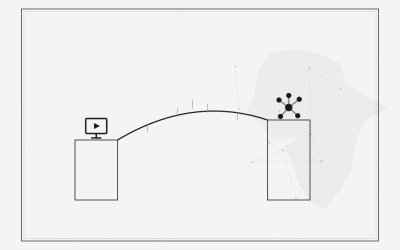
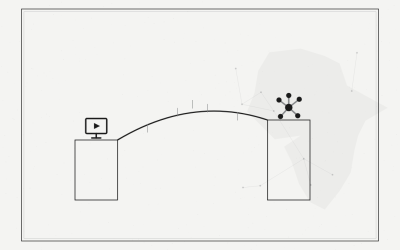
When the only route in is online, the marketing does the sorting before the judging starts. A founder who follows StartUp Namibia on social media, reads the business press or sits inside the Basecamp network sees the call early. A founder outside those channels may learn of it after the window has closed, if at all.
This is not a flaw unique to one grant; it is how digital-first distribution works. The reach of the announcement sets the pool of applicants, and the pool sets who can possibly win. The medium is quietly part of the eligibility.
An online-only grant is filtered first by who sees it, not by who deserves it.
A fortnight is a marketing deadline
The two-week window turns the grant into a campaign problem. StartUp Namibia has to reach thousands of scattered small businesses fast, which is why the call travels through social posts, partner networks and the trade press rather than a gazette notice. Speed of spread, not depth of detail, decides the reach.
For the founder, the same clock is a prompt to be findable. A business with an active online presence catches time-boxed opportunities like this one; a business that is invisible online misses them by default, however sound its books.
Short windows reward the visible; the invisible never start the race.
Digital application as a screening tool
The online form is also a filter by design. To apply, a founder must supply a bank account, a BIPA founding statement, bank statements and a continuity plan, all uploaded rather than posted. That favours businesses already comfortable with digital admin and already holding their documents in a form a screen will accept.
The effect is to reward a kind of digital readiness. The grant does not test whether a firm can run an online advert, but it does test whether a firm can operate through an online process, and in 2020 those capacities increasingly overlap.
The application itself measures whether a business can function online at all.
The reach dividend
There is an upside to the digital design. An online call reaches the whole country from one desk, costs little to run and leaves a clean record of every application. For a programme trying to spread N$7.5 million across 500 firms in two weeks, no paper process could match that speed or that audit trail.
The trade-off is coverage. The founders hardest to reach, rural, offline and outside the start-up conversation, are the ones a screen serves worst, even when their need is greatest. Digital reach is efficient and uneven at the same time.
Online distribution is fast and cheap; its blind spot is everyone it cannot reach.
For a founder, the lesson of the 2020 grant is that visibility is now a business asset: the firms that win time-boxed public support are the ones already present in the channels that carry it. The decision it forces is whether to treat an online presence as marketing vanity or as the practical precondition for hearing about the next N$15,000 before the window shuts.
Sources: The Namibian; StartUp Namibia launches Round 2 (Startup Weekly); StartUp Namibia avails grant for local start-ups (Namibia Economist)