By Dhiladhila Magazine · Issue 05
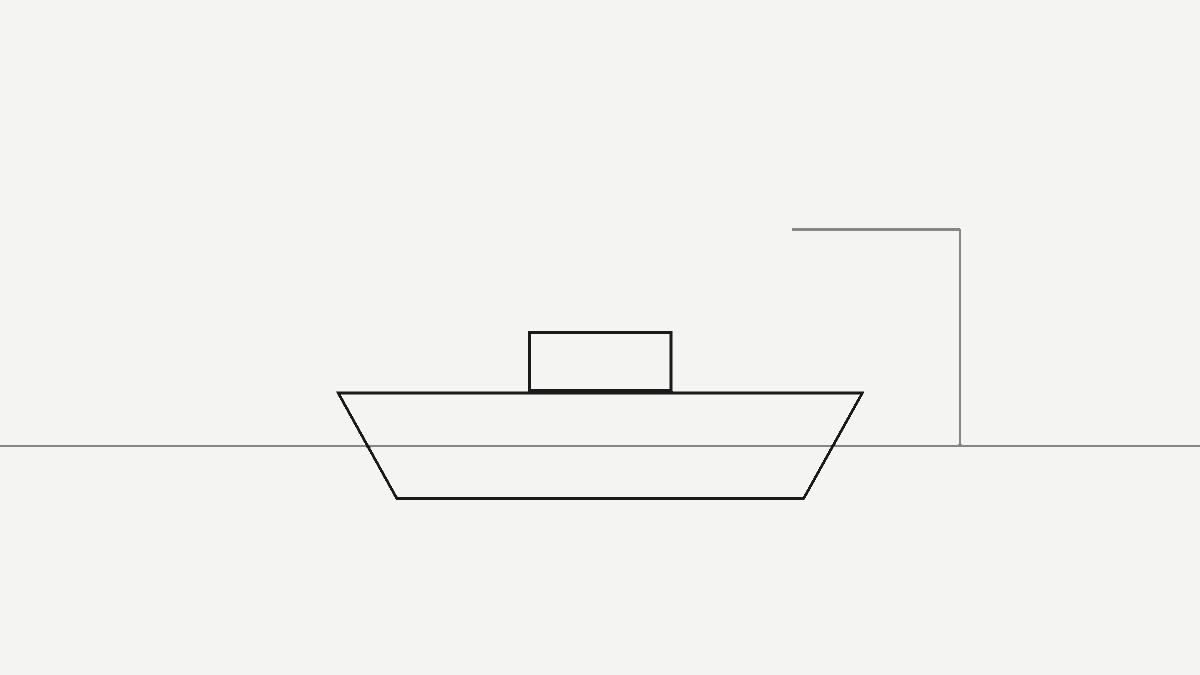
A discovery happens far out at sea, but the work it generates has to land somewhere on shore.
A deep-water discovery happens far out of sight, but the work it generates has to land somewhere onshore. Jonker-1X, drilled about 270 kilometres off Namibia’s south coast, points to a build-out on land: the supply bases, quays, warehousing and engineering support that an expanding appraisal campaign will require. NAMCOR’s announcement of the discovery is, for a contractor, a signal about demand for fixed infrastructure.
The attention goes to the rig in the Atlantic. The reality that decides whether Namibia captures value is whether its ports and yards can service that rig, because a country without the shore base to support offshore work watches the spending flow to a neighbour that has one.
Offshore work needs an onshore base
A single deep-water well is supported by a constant shuttle of vessels carrying fuel, water, drilling fluids, equipment and crew from a supply base on land. Appraising a discovery means more wells over several years, and that multiplies the demand for quay space, laydown yards, warehousing and fluid-handling facilities at a port within reach of the acreage.
Namibia has two candidate ports. Walvis Bay is the larger and better equipped, while Luderitz sits closer to the Orange Basin blocks in the south. Neither was built for a deep-water oil campaign, so serving one becomes a construction and upgrade programme rather than a matter of clearing a berth.
Every offshore well is anchored to an onshore base that has to be built or upgraded.
The engineering of deep water
Jonker-1X was drilled in about 2,210 metres of water to a total depth of 6,168 metres, figures that describe an exacting engineering environment. Everything that later develops such a discovery, from subsea equipment to pipelines and floating production, is specialised heavy engineering, and even the appraisal phase demands precise marine and subsurface work well beyond ordinary construction.
For engineering firms, that is both the opportunity and the barrier. The work is high value and technical, but it calls for competence Namibia has not previously needed at scale, so the near-term question is how much can be done locally and how much must be imported with the rigs.
Deep water rewards specialised engineering and punishes improvisation.
Remoteness and the cost of the south coast
The Orange Basin lies off a thinly served stretch of coast, and distance sets the cost of supporting it. Materials and parts travel far, vessel time is expensive, and any onshore base has to hold enough stock to keep an offshore operation running without a nearby city to draw on. Remote support is a different discipline from ordinary port logistics.
That is why durable, well-stocked shore infrastructure matters more than architectural ambition. The base that keeps a campaign running through a supply delay is worth more than a grand facility that runs short at the wrong moment, and designing for that reliability is the real engineering task on land.
On a remote coast, a base is judged by what it can keep running, not how it looks.
The construction read
For a contractor or ports authority, the appraisal phase is where the buildable work sits: quay strengthening, laydown areas, warehousing, fuel and fluid storage, and the roads and services that connect them. This is unglamorous civil and marine construction, but it is the physical precondition for the country hosting an oil industry at all.
The property risk is timing. Build too slowly and the campaign is serviced from abroad; build too far ahead of demand and the investment stands idle. Matching the shore build to a still-uncertain appraisal schedule is the judgement that decides whether the spending is captured or wasted.
The base has to arrive with the demand, not years before or after it.
For a contractor, an engineer or a ports authority, Jonker-1X marks where Namibia’s offshore opportunity becomes an onshore construction question. The decision is whether to invest now in the supply-base capacity at Walvis Bay or Luderitz that an appraisal campaign will need, or to let the servicing of a proven basin, and the value it carries, be handled from ports beyond the country’s borders.
Sources: NAMCOR; Namibian Ports Authority (Namport); Shell finds more hydrocarbons offshore Namibia (Offshore Technology)