
By Dhiladhila Magazine · Issue 10
Half the money must stay home by law. The harder question is whether there is enough at home to buy.
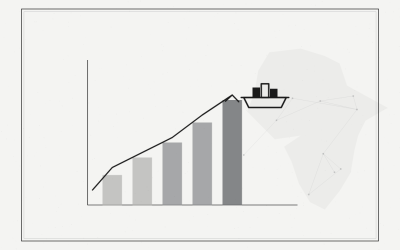
Namibia’s retirement funds now hold N$301.9 billion (about US$17.8 billion), a pool that grew 14.9 per cent over the year to March 2026 and, according to the latest Namfisa figures, sits at a funding level of 101 per cent. The number is large enough to move the domestic market on its own, which is precisely the difficulty.
Almost half of that money – 49.3 per cent – is invested at home, comfortably above the 45 per cent floor that Regulation 13 sets. Yet the domestic share slipped from 50.3 per cent the previous quarter, a small drift that raises the sector’s oldest question: whether there is enough to buy in Namibia to hold this much capital productively at home.
A pool that outgrows its own market
The concentration is stark. The Government Institutions Pension Fund alone holds 69.4 per cent of industry assets, and the three largest funds together carry 76.9 per cent. When one fund controls that much of a small market, it cannot trade in size without moving prices, and it soon runs short of listed local instruments deep enough to absorb its inflows.
That scarcity, not reluctance, explains the pull offshore. Funds placed 31.2 per cent internationally and 17.6 per cent within the Common Monetary Area, sending savings to markets wide enough to price them. The domestic floor keeps money home; it does not create the assets that money needs to buy.
The binding constraint is the shortage of local instruments, not any lack of local intent.
What the 45 per cent floor actually buys
Regulation 13 requires at least 45 per cent domestic exposure, and the industry remains fully compliant with the limits it prescribes on property, shares and dual-listed companies. Compliance, though, is a rule on where money sits, not a test of what it builds. A fund can meet the requirement by holding government bonds and banking shares without financing a single new enterprise.
This is why the domestic figure alone flatters the picture. Half the pool at home reads as commitment; much of it is parked in the same handful of liquid instruments that every fund already owns. The regulation directs the tide but not the harbour.
A domestic floor governs location, not creation – and the two are easily confused.
The unlisted channel the rules already open
The narrower route into the real economy is unlisted investment. Under Regulations 28 and 29, funds must place between 1.75 and 3.5 per cent of assets in unlisted Namibian companies through special-purpose vehicles, deploying development capital into businesses no exchange lists. A World Bank review of the approach treated it as a deliberate attempt to route pension savings into domestic growth.
The mechanism is small but pointed. Even 3.5 per cent of N$301.9 billion is capital measured in billions, aimed at private equity, infrastructure and property rather than the listed market. It is the part of the pool designed to build rather than to hold.
The band also caps ambition. A ceiling of 3.5 per cent means that even a fully deployed unlisted book leaves more than nine-tenths of the pool in listed and offshore instruments, so the developmental portion can only ever nudge the wider economy. Raising the ceiling would test whether Namibia has enough bankable private deals to absorb more, which is the real bottleneck the headline hides.
The unlisted rule is the one channel that turns saving into building.
The allocation decision that follows
Net investment income of about N$2 billion carried the industry through a quarter in which benefit payments outran contributions, a reminder that returns, not fresh saving, increasingly drive the pool’s growth. Where those returns are earned – at home or abroad – is now a strategic choice with national consequences.
For a trustee or asset manager, the trade is explicit: chase the deeper liquidity and diversification of offshore markets, or accept thinner local options to keep more capital building at home. The 45 per cent floor sets the minimum; everything above it is a judgement call.
Above the floor, every allocation is a bet on whether Namibia can absorb its own savings.
For an asset manager or trustee, the N$301.9 billion pool poses a question the compliance sheet cannot answer: whether to keep meeting the domestic floor with liquid, familiar instruments, or to push capital into the unlisted vehicles that actually build companies. The decision that follows is whether Namibia’s problem is too little local investment, or too few local things worth investing in.
Sources: The Namibian; Leveraging Pension Fund Investment for Domestic Development (World Bank); Unlisted Investment Managers (Namfisa)