
By Dhiladhila Magazine · Issue 16
Bank Windhoek is moving banking into the conversation, and building part of the relationship on a platform it does not own.
Strip away the app and the security notice, and Bank Windhoek’s WhatsApp launch carries a larger idea: that banking is ceasing to be a place you go and becoming a thing that happens inside a conversation you are already having. Linda Aipinge-Nakale, an executive director in the Ministry of Information and Communication Technology, put it directly at the launch, calling the convergence of banking and communication not a distant trend but the lived reality of the modern consumer.
If that is right, the interesting question is not what the channel does today, but what it implies for where a bank lives, and on whose ground.
Banking dissolves into the conversation
For most of its history banking made the customer travel to the institution: a branch, then a website, then an app the bank designed and owned. WhatsApp inverts that. The bank now appears inside a space built for talking to other people, between a family group and a work thread, and the act of banking becomes another message rather than a separate errand.
That is a genuine shift in where value sits. When banking is a destination, the building or the app is the asset; when banking is a conversation, the relationship and the moment of attention are, and those are harder to own and easier to lose.
When the bank moves into the chat, the branch stops being the place the relationship lives.
The channel you do not own
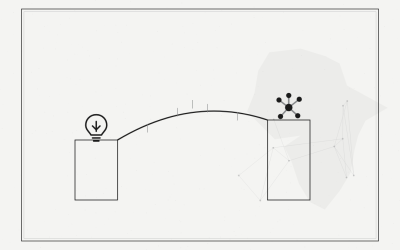
There is a catch inside the idea. WhatsApp belongs to a global platform, not to Bank Windhoek, which means the bank is building a growing share of its customer relationship on ground it rents. The reach is immediate and the cost is low, but the terms, the rules and the presence of every competitor on the same surface are set elsewhere.
This is the strategic tension foresight has to name. A channel that every rival can also occupy, governed by a platform with its own priorities, offers presence without control. The bank gains the conversation and accepts a dependency in the same move.
Renting the channel buys reach today and a dependency the bank cannot price tomorrow.
From product to presence
The deeper implication is about identity. If banking becomes something woven through messaging, a bank competes less on the elegance of its own app and more on being present, trusted and quick in a shared space it does not design. The advantage shifts from the product a customer visits to the presence a customer meets without thinking about it.
Chat banking as a category has been building toward this for years, and the direction of travel is consistent: interactions get shorter, more frequent and more conversational, and the institution that feels most natural in that flow tends to hold the customer. Presence, not the feature list, becomes the defensible position.
In a conversation-led future, the bank that feels most natural in the thread keeps the customer.
The idea worth stress-testing
For a board, the convergence thesis is worth taking seriously and testing hard. The experience of chatbot-led banking elsewhere suggests the gains are real but uneven: customers adopt fast for simple tasks and stall where trust, complexity or platform risk intrude. The idea is directionally right and operationally demanding.
The strategic question it forces is uncomfortable. If banking really is converging with communication, a bank must decide how much of its future to build on channels it does not own, and how to keep a distinct identity when the customer meets it inside someone else’s app.
Betting on convergence means deciding how much of the bank to build on rented ground.
For a strategist or a board, Bank Windhoek’s launch is less a product decision than a preview of where banking is heading: into the conversation, and onto platforms the bank does not control. The decision it raises is how to be present where customers already talk without becoming a tenant of the platforms that host them.
Sources: The Namibian; A new generation of consumer banking: chat banking (Clickatell); A South African bank’s chatbot lessons (American Banker)