By Dhiladhila Magazine · Issue 01
Four lenses, one platform – and a clear read on how Namibia proposes to grow its small firms.
Some launches are worth reading whole, because they compress a country’s economic argument into a single room. In February 2026, ScaleUp Namibia brought more than 18 of the country’s innovation hubs under one Windhoek roof, and in doing so laid out a complete picture of how Namibia proposes to grow the small firms it is counting on.
This is the full account: what the platform is, who built it, the problem it names, the money and technology behind it, and what it signals. The platform launched to boost SME growth is, read closely, a bet that coordination is the thing Namibia’s scattered support has been missing.
What ScaleUp Namibia is
ScaleUp Namibia, or SUN, is a national platform led by the Namibia Investment Promotion and Development Board and coordinated by the National Commission on Research, Science and Technology. It gathers the country’s incubators, accelerators, co-working spaces, makerspaces and digital transformation centres into a single framework, with a public portal that bills itself as a one-stop hub for the startup scene.
It rests on five stated pillars: funding, infrastructure, brand awareness, ecosystem data and capacity development. Together they describe an attempt to support a firm across its whole life, from an idea in a makerspace to a company visible to investors, rather than at one isolated stage.
SUN is a single framework laid over a field of previously separate hubs.
The problem it names
The platform’s founding claim is diagnostic. Deputy Minister Dino Ballotti said SUN answered systemic challenges that entrepreneurs face not because they lack talent or ambition, but because of fragmentation within the country’s support structures. In other words, the parts existed; the connections did not.
That is a precise and unusual thing for a launch to admit. It locates the failure not in founders or in a missing fund, but in the spaces between existing programmes, which is why the response is coordination rather than yet another standalone scheme.
It is also a claim with a history behind it. The first version of the platform, launched in 2025, already drew 16 partner organisations together on the same argument, and the February 2026 event was the point at which that gathering acquired a shared address and a wider count of hubs. The diagnosis has stayed constant even as the structure around it has grown.
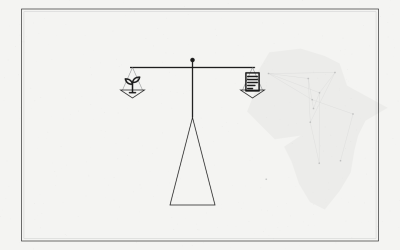
SUN blames the gaps between programmes, not a shortage of talent or ideas.
The money and the machinery
Coordination still runs on capital and infrastructure. On the finance side sit institutions such as the Development Bank of Namibia, with SME and women-focused facilities, and a history of donor-backed grant funding through the GIZ-implemented Start-Up Namibia, whose Slingshot Fund offered milestone grants to incubated firms. On the ground sit the hubs – Basecamp, Impact Tank, the Co-Creation Hub – now sharing a home.
The machinery is deliberately layered. Grants carry a firm through its earliest, unbankable phase; hubs supply space, mentorship and skills; and the platform’s data pillar aims to make the firms that emerge visible to lenders and investors who would otherwise never find them.
The design follows the money’s natural sequence. A startup begins on grants because no commercial lender will touch it, matures inside a hub until it has customers and records, and only then becomes a business a bank or an investor can price. SUN’s ambition is to make that handoff routine rather than accidental, so that firms are passed along the chain instead of stalling between its links.
The platform tries to stitch grants, hubs and investors into one continuous chain.
The people carrying it
A structure is only as real as its operators, and SUN’s are already at work. NIPDB Acting Chief Executive Jessica Hauuanga argued that competitiveness is not just a matter of policies on paper; NCRST, under chief executive Professor Anicia Peters, coordinates the research-to-market side; and founders such as Meike Neitz of Embassidy welcomed the hubs joining forces under one roof. Notably, several of the principals are women.
These are the people whose follow-through, not the launch programme, will decide the outcome. A platform convened by agencies lives or dies on whether operators keep the hubs stocked, the mentors present and the portal current after the ceremony ends.
The launch convened the platform; its operators are who will sustain it.
What it signals, and what it does not
Put together, SUN signals a coherent strategy: name fragmentation as the problem, coordinate the existing parts, and make the results visible to capital. For a founder, an investor or a policymaker, that is a clearer map of Namibian entrepreneurship than existed before, and each can act on it.
The limits are just as clear. Coordination cannot conjure funding, skilled mentors or paying customers where they are thin, and a portal that depends on hubs reporting honestly can present a fuller picture than the reality it maps. The platform organises the ecosystem; it does not, by itself, deepen it.
The honest reading is that SUN is a beginning with a real thesis, not a finished answer. It has correctly identified that Namibia’s support was scattered and has built the frame to gather it, which is genuine progress. Whether the gathered system grows deep enough to move the SME numbers that matter is a question the next few years, not the launch day, will settle.
SUN maps and connects the ecosystem; deepening it is the unfinished task.
For everyone downstream – the founder deciding where to seek help, the financier deciding where to look for deals, the official deciding what to fund next – ScaleUp Namibia is the single place Namibia has chosen to put its bet on small-firm growth. The decision it leaves on the table is whether to treat the platform as the country’s working infrastructure for entrepreneurship, and build on it, or as one more launch to watch and wait out.
Sources: The Namibian; Scaleup Namibia launched to drive economic growth (Namibian Sun); Startup NIPDB – ecosystem portal