
By Dhiladhila Magazine · Issue 16
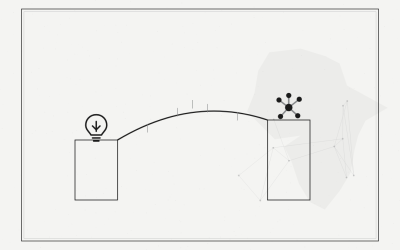
Behind the targets sits an argument: that a resource-scarce latecomer can design its way into a value chain that does not yet exist.
Strip Namibia’s Green Hydrogen and Derivatives Strategy of its numbers and a proposition remains: that a small, arid, capital-scarce country can position itself, by deliberate design, near the front of an industry the world has not yet built. The document is as much a development thesis as an energy plan.
Its central move is to treat sunlight and wind as an exportable resource. Where older strategies exported what the ground held, this one proposes to export what the sky delivers, converting renewable electricity into shippable molecules. The strategy is, in effect, a wager that a latecomer can turn a physical endowment into an industrial position.
The resource-based development wager
Development theory has long warned that resource wealth can trap as easily as it lifts, when raw material leaves and value forms elsewhere. Namibia’s strategy answers that critique in its own title: derivatives, not raw hydrogen. By insisting on ammonia, synthetic fuel and green iron, it tries to design in the value addition that older extractive models designed out.
Whether intention survives contact with economics is the open question. Downstream processing is where margin lives, but also where competition, capital and technical complexity concentrate. The strategy states the ambition to move up the chain; theory says the ground there is contested and rarely yielded to newcomers without a cost.
Naming derivatives is easy; capturing the value they carry is the hard, contested part.
First-mover as strategy
The plan’s implicit doctrine is first-mover advantage: build before rivals, sign the early offtake, and set the standards a young industry adopts. For a country with little manufacturing legacy, being early is offered as the substitute for being established. The clusters, the research institute and the enabling law are all instruments for occupying ground before it is crowded.
First-mover theory is double-edged, and the strategy inherits both edges. Movers can capture position, but they also absorb the highest costs and the deepest uncertainty while the market is unproven. Namibia is choosing to pay the pioneer’s premium in exchange for the pioneer’s option, a trade that pays only if the market it anticipates actually forms.
Being first buys position and pays the pioneer’s premium in the same breath.
The cluster as an organising idea
The strategy’s spatial theory is the hydrogen valley, three coastal clusters at Lüderitz, Walvis Bay and Cape Fria where generation, electrolysis, derivative plants and ports concentrate. Clustering is a deliberate borrowing from industrial economics: co-location lowers shared-infrastructure costs and lets firms draw on common power, water and skills that none could justify alone.
The idea also organises the state’s role. Instead of chasing scattered projects, the government can build enabling infrastructure and institutions around a few defined nodes. It is a framework for turning a diffuse ambition into a small number of places where policy, capital and skills are meant to compound rather than disperse.
The cluster is less a map than a theory about where advantage is allowed to accumulate.
A framework judged by its assumptions
Read as theory, the strategy is a stack of assumptions: that global demand arrives on schedule, that derivatives can be captured locally, that capital accepts a frontier, and that skills can be built in time. Each is defensible and none is guaranteed, which is the honest character of any forward strategy written before its market exists.
That makes the document useful as a map of bets rather than a forecast of outcomes. Its worth is that it states its wagers plainly enough to be tested against events. A framework this explicit invites the right question, not whether it is bold, but which of its assumptions is most likely to break first.
A strategy written before its market is a set of assumptions waiting to be tested, not a prediction.
For an analyst, policymaker or student of development, Namibia’s strategy is worth reading less for its targets than for its theory: a latecomer’s attempt to design a position in an industry still forming. The decision it poses to anyone modelling the country’s future is which assumption to stress-test first, demand, value capture, capital or skills, because the framework stands or falls on the weakest of them.
Sources: GH2 Namibia – media and downloads; Namibia wants to build the first hydrogen economy (MIT Technology Review); Namibia’s green industrialisation blueprint (Ammonia Energy Association)