By Dhiladhila Magazine · Issue 17
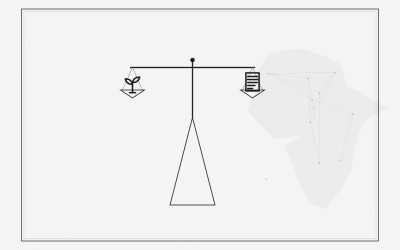
One document sets a five-year course; the other offered early evidence that the course was already being steered.
On 21 July 2025, President Netumbo Nandi-Ndaitwah did two things at once in Windhoek: she launched the Sixth National Development Plan and reported on her government’s first 100 days in office. The pairing was deliberate. One document sets a five-year course to 2030; the other offered early evidence that the course was already being steered.
Read together, they frame the same question from two ends. NDP6 asks what Namibia intends to become by the close of its Vision 2030 horizon; the 100-day report asks whether the new administration can turn intention into delivery. This is the story of both – the plan’s shape and the first proof of motion behind it.
A plan built on four pillars
NDP6 covers the financial years 2025/26 to 2029/30 and carries the theme of fostering economic growth, inclusiveness and resilience. It rests on four pillars – economic transformation, human development, environmental sustainability and governance – split across nine thematic areas and 47 focus areas, and it is positioned as the final medium-term plan before Vision 2030.
The plan also names where effort concentrates: seven priority sectors from agriculture and education to health and housing, and eight economic enablers including mining, energy, oil and gas, tourism and logistics. The design is comprehensive by intention, meant to align a whole government behind one framework for the decade’s closing stretch. It is also aligned outward, mapped against the Sustainable Development Goals, the African Union’s Agenda 2063 and the regional Vision 2050, so that a national plan sits inside the commitments Namibia has already made abroad.
NDP6 is less a wish list than a map of where the state says its attention will go.
The price of the ambition
The plan’s defining figure is its cost. NDP6 puts the investment needed at N$505 billion – about US$28 billion – some two and a half times the country’s yearly output. No budget can supply that, so the plan relies on a forward-financing model built on future resource rents and heavy private-sector participation.
That financing choice shapes everything else. It turns NDP6 into an offer to investors as much as a plan for citizens, and it ties the plan’s success to resources – oil, gas, hydrogen and minerals – that are still being developed. The ambition is real, and so is its dependence on money the country has not yet raised.
A plan priced above the whole economy is a bet that tomorrow’s resources will fund today’s build.
What the first 100 days showed
The 100-day report was the plan’s counterweight: concrete actions against the plan’s promises. A visa-on-arrival system introduced on 1 April 2025 had issued 115,857 visas and raised N$171 million by launch day. Drought relief of N$1.3 billion reached some 1.4 million people across 384,935 households, and a food-voucher system served nearly 145,000 more.
Infrastructure featured too: the Oshakati water treatment plant was commissioned on 17 July 2025, boreholes were contracted across eleven regions, and Namibia hosted the Commonwealth Trade Ministers Meeting in June, its first outside the United Kingdom. The report’s purpose was to show a government already spending and building, not merely planning.
The 100-day list is the plan’s down payment – proof offered before the long bills come due.
Where the plan meets its people
NDP6 is meant to be felt in daily life, and several priorities aim there directly. Free higher and vocational education is planned for the 2026 academic year; a National Youth Fund capitalised at N$257 million targets young entrepreneurs; and housing, health and sanitation appear as priority sectors, with thousands of housing units reported under construction.
These are the tests ordinary Namibians will apply. A plan is judged less on its pillars than on whether a graduate finds training, a young business finds capital and a household finds water and a home. The 100-day report reached for the same register, listing drought relief, food vouchers and a commissioned water plant as things already delivered rather than promised. NDP6’s credibility rests on converting its sectors into services people can actually use.
The plan will be measured in classrooms, clinics and title deeds, not in thematic areas.
The gap the plan has to close
The honest risk is the one every Namibian plan has faced: the distance between design and delivery. Earlier plans set strong targets and missed them, structural unemployment has stayed above 33 percent, and critics warn that switching frameworks too often has drained institutional memory. NDP6 answers with a language of implementation realism, but the answer is a promise, not yet a record.
That is why the launch paired the plan with the 100-day report. Together they ask to be judged on motion as well as intention – on what is built, not only what is drawn. The plan sets the destination; the early months were offered as evidence that the country has, this time, started to move.
NDP6’s real target is not 2030’s numbers but the habit of finishing what it starts.
For an executive, an investor or a public official reading Namibia in mid-2025, NDP6 and its 100-day report together set out both the country’s five-year offer and the first evidence behind it: an ambitious, resource-financed plan matched to early, visible action. The decision each now faces is whether to commit on the strength of that start – to fund, build or partner inside the plan – or to wait for proof that the motion of the first 100 days can be sustained across the five years the plan needs.
Sources: The Namibian; NDP 6 (National Planning Commission); Namibia Investment Promotion and Development Board