By Dhiladhila Magazine · Issue 01
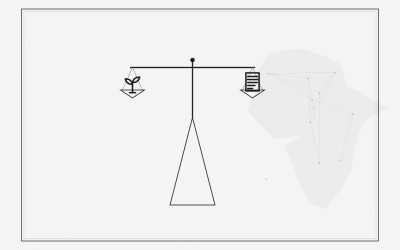
One grant, read across capital, formality, digital reach and sector triage – the whole map on a single page.
A grant announcement is easy to file under charity and forget. StartUp Namibia’s N$7.5 million survival round deserves closer reading, because the same N$15,000 cheque means something different depending on where a business owner stands. This guide reads the 2020 grant across the angles our desks cover, on the argument that it only makes sense whole.
The facts are plain enough. Up to 500 early-stage firms, each registered less than five years and hit by the pandemic, can receive N$15,000 in non-dilutive support, applied for online between 2 and 16 September 2020, with priority for women-owned businesses, tourism and the Erongo region. What follows is what those facts mean once you stop reading them as a press release.
As capital, it is the cheque no one else writes
For the money desk, the defining feature is what the grant is not. It is not a loan, so nothing is repaid; it is not investment, so no equity changes hands. That places it precisely where the Development Bank’s credit and private investors both decline to go – the firm under five years old with no collateral and no scale.
The grant also does not travel alone. StartUp Namibia, commissioned by the German Federal Ministry for Economic Cooperation and Development with the Ministry of Industrialisation and Trade, pairs the cash with incubation at its Basecamp centre and a separate Slingshot Fund. The N$15,000 is capital wrapped in business development, not a bare hand-out. An earlier round in mid-2020 had already sent the same sum to 200 firms, so the survival grant arrives as a proven mechanism rather than an experiment.
It is the rare money that sells neither debt nor ownership to the founder who takes it.
As formality, it is a registration drive in disguise
For the intellectual-property desk, the telling line is the eligibility requirement for a BIPA founding statement. To claim the grant, a business must first exist on paper at the authority that also registers trademarks and designs. The money pulls informal founders into the formal system as the price of entry.
That has a value beyond the grant. A registered business gains a verifiable identity a bank can serve and a buyer can contract with, and it lands at the registrar that protects its name. The founding statement that qualifies a firm for N$15,000 is the same document that later underwrites a loan. Whether founders keep the registration after the grant is decided is the open question.
The grant buys a firm a legible identity, which may outlast the cash itself.
As distribution, it runs on who can be reached online
For the consumer and marketing desk, the process is the story. The grant is applied for entirely online in a two-week window, which means the reach of the announcement sets the applicant pool before merit is weighed. Founders inside the start-up conversation see it early; those offline may not see it at all.
The design is efficient and uneven together. One online call covers the whole country cheaply and leaves a clean record, but it serves rural and offline founders worst, exactly where need can be highest. Visibility, in this model, becomes a business asset in its own right.
An online-only grant is filtered first by reach, and only then by worth.
As triage, it leans toward the leisure economy
For the lifestyle desk, the priority list matters. Tourism, hospitality and Erongo businesses sit near the front of the queue because the pandemic hit them hardest: occupancy that ran near 60% in 2019 collapsed to single figures by the middle of 2020. The grant points its money where the damage was deepest.
N$15,000 cannot refloat the sector, and it is not meant to. It is a bridge for the smallest operators – a guide, a guesthouse, a craft stall – to survive until visitors return. For those micro-enterprises the grant is less growth than the chance to still be trading next season.
For the leisure trade the grant is a lifeline, not a recovery plan.
As policy, it is one instrument among several
For the wider economic read, the grant sits inside a crowded field of small-business support, from the central bank’s pandemic measures to other funds promising larger sums to more established firms. The survival grant is deliberately different: small, fast, non-dilutive and aimed at the earliest-stage businesses that other schemes tend to overlook.
Read together, the round is coherent in a way no single desk shows. Capital reaches the pre-bankable, formality follows the money, digital distribution sets the audience, and sector priority does the triage. Each part answers a different constraint, but they only add up when read at once. The risk is the same across all four: a bridge mistaken for a destination.
The grant is a well-aimed bridge; the mistake would be treating it as the far bank.
For a Namibian founder, the 2020 survival round is worth reading in full rather than in part: it is at once the cheapest capital on offer, a push toward formal registration, a test of online visibility and a lifeline for the leisure trade. The decision it leaves on the table is what to do with the N$15,000 and the registration that comes with it once the emergency passes – treat them as a one-off rescue, or as the first entries in the record of a business built to outlast the crisis that started it.
Sources: The Namibian; Bank of Namibia; SME fund to boost small businesses (New Era)