
By Dhiladhila Magazine · Issue 16
The most important idea in the overhaul is architectural: separate the network you own from the services you sell.
The eye-catching part of Telecom Namibia’s June 2026 review is the money and the network. The more consequential idea is quieter and structural: a plan to draw a line between the infrastructure the company owns and the services it sells across it. The operator says it will study an infrastructure asset transition framework and separate service delivery from infrastructure operations.
That is not cosmetic. It is one of the oldest reform ideas in telecoms – the split between an infrastructure company and a service company – now put on the table for a Namibian state operator that has run both as one.
The infraco-servco idea
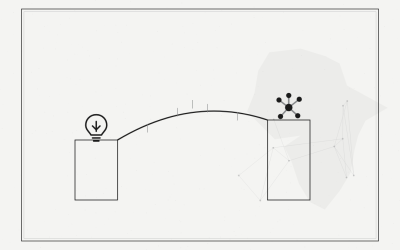
The logic of separation is that owning cables, towers and gateways is a different business from selling connections and applications to customers. One is a slow, capital-heavy utility; the other is a fast-moving, marketing-led service. Bundled together, they blur accountability and cross-subsidise each other. Split apart, each can be priced, measured and, in principle, opened to other users of the same network.
Telecom Namibia’s review pairs the idea with international benchmarking of how other operators are structured. That signals a deliberate look at models where the network is a shared, regulated asset and competition happens in the services layered on top.
Separation asks a simple question: is the pipe a shared utility, or a private advantage.
Namibia already owns half the answer
This is not a blank-sheet exercise. Telecom Namibia already runs an infrastructure subsidiary, PowerCom, which since 2013 has concentrated on building and leasing telecommunications towers, rooftop hosting and third-party co-location under a network-facilities licence. It was acquired for a nominal N$2.00 with roughly N$180 million (about US$10 million) in assumed debt, and is led by chief executive Beatus Amadhila.
In other words, the structural pieces of an infrastructure company already exist inside the group. The overhaul’s question is whether to complete the separation – a clean infrastructure entity and a distinct service business – rather than invent it from nothing.
The scaffolding for separation is already standing; the choice is whether to finish the building.
From network owner to service company
The stated destination is telling. Telecom Namibia frames the transformation as a move from a traditional, infrastructure-focused operator into a service-oriented digital communications company. That is the servco half of the idea: a business whose value sits in products, data and customer relationships rather than in the cables underneath them.
Done well, that reframing lets the service arm behave commercially while the infrastructure arm is run as a long-horizon utility – even, eventually, one that carries rival traffic for a fee. It is a foresight bet that the future margin is in services, not in owning the ground the signal travels through.
The bet is that tomorrow’s value is in the service sold, not the infrastructure owned.
Where the idea can fail
Separation is elegant on paper and hard in practice. Splitting a small operator can strand assets, duplicate overheads and create two weak entities where there was one struggling group. Benchmarking against larger markets risks importing a structure Namibia’s scale cannot carry. And a network run as a shared utility only pays off if regulators and rivals actually use it.
The intellectual honesty of the review will show in whether it treats separation as a genuine architecture or as a slogan. The idea is sound; the execution is where sound ideas usually go wrong.
A good structural idea at the wrong scale becomes two problems in place of one.
For a policymaker, a regulator or a strategist watching state enterprises, Telecom Namibia’s overhaul is a live test of an old idea on a small stage. The decision it forces is whether to commit to a real infrastructure-service split – with the shared network and open access that implies – or to keep the two businesses fused and settle for incremental repair.
Sources: The Namibian; Telecom Namibia commences strategic transformation programme (Telecom Namibia); PowerCom (Wikipedia)