
Farming – Agritech & Innovation · Editorial
By Moakanyi Magazine · China-in-Africa · June 2026
Ports and railways photograph well; a seed bank does not. Yet the longest-lasting infrastructure in agriculture is often the least visible: the research station that breeds a drought-tolerant variety, or the laboratory that defeats a crop pest before it reaches a harvest. China's plan for a China-Africa centre on tropical agricultural science belongs to this quieter category, where the returns arrive over decades rather than at ribbon-cuttings.
China's foreign ministry lists a China-Africa Centre for Tropical Agricultural Science and Technology as under construction, alongside a Juncao cooperation centre, a bamboo centre and a perennial-rice technology centre. As an official source, these are attributed commitments rather than completed facilities, and the gap between an announcement and a working institution is exactly where such projects are tested and sometimes quietly stall.
The hub: Hainan's tropical match
The logic is geographic before it is political. Much of China's tropical agricultural expertise sits in Hainan, whose climate mirrors swathes of equatorial Africa, and where the Chinese Academy of Agricultural Sciences is building an international sci-tech exchange platform and aims for a leading global agricultural science centre by 2035. The same crops, pests and soils make the knowledge transferable in a way temperate-zone research never could be.
That shared latitude is the centre's quiet advantage. A rice variety bred for a hot, humid Chinese province has a real chance of thriving in West Africa, where a variety developed in Europe or North America would not. Matching the science to the climate, rather than to the donor's convenience, is what gives the project a credible path to usefulness on African farms, and distinguishes genuine research transfer from a showpiece.
Shared latitudes make shared agronomy possible in a way shared politics never could.
The network: alliances, labs and experts
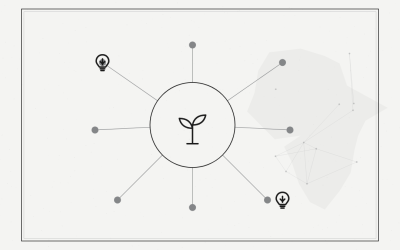
The centre does not stand alone. It sits within a China-Africa Agricultural Science and Technology Innovation Alliance and a wider web of joint laboratories, including a crop-pest lab with Rwanda and a soil-and-water conservation lab with Nigeria, plus the 200-plus agricultural experts the ministry says have been deployed since the 2024 Summit. A single building matters less than whether its outputs flow into this network and out to the field.
This is where research either earns its keep or stalls. A new variety bred in a station is worthless until it reaches a farmer through extension services, seed multiplication and trusted local institutions. The demonstration villages and training programmes attached to the alliance are meant to be that delivery system, the difference between a published result and a planted crop, and the part that historically proves hardest to sustain once the launch ceremony is over.
A laboratory matters only as far as its seeds travel.
The caution: knowledge that must stay African
There is a question of ownership behind the goodwill. Demonstration centres and germplasm exchanges work best when the resulting varieties, data and methods remain in African hands, embedded in national research institutions, rather than circulating back as a dependency on a foreign centre. Seeds and genetic material are strategic assets, and who controls them matters as much as who shares them, especially when the sharing partner is also the buyer of the eventual harvest.
The value of the research is realised only if the capacity it builds is genuinely transferred: African scientists trained, African institutions strengthened, African farmers owning the improved seed they plant and free to replant it. Handled that way, the centre builds lasting independence. Handled poorly, it risks substituting one form of reliance for another, which is the line such cooperation must be watched along rather than waved through.
Imported knowledge becomes an asset only once it is locally owned.
There is a continental reading of all this. A single centre, however well sited, cannot carry the agricultural ambitions of 53 countries; its value depends on whether its varieties, methods and trained people radiate outward into national research systems rather than staying tethered to one flagship building. The same is true of the Juncao, bamboo and perennial-rice centres announced alongside it: each is a promise whose worth will be measured by reach, not by the ceremony that launched it.
Measured against a railway, a research centre looks modest. Measured over a generation, the variety that survives a drought or resists a blight may do more for African food security and agricultural exports than any single shipment of grain, which is why this slow, unphotogenic infrastructure deserves more attention than it usually gets, and more scrutiny over who ultimately owns what it produces.
Sources: China MFA – FOCAC follow-up outcomes, Xinhua – Hainan agricultural sci-tech platform