
By Dhiladhila Magazine · Issue 07
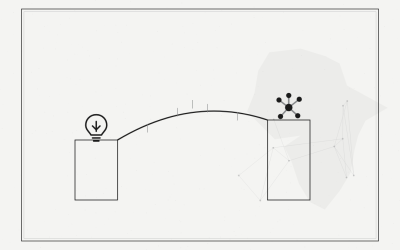
Development theory is split on the township mall: a node that lifts an area, or a magnet that drains its informal traders.
When President Netumbo Nandi-Ndaitwah opened Goreangab Mall on 6 June 2026, she framed it as proof that a place once built for exclusion could become a centre of economic activity. Development theory is less certain. It reads a formal mall dropped into an informal settlement as a wager with two possible outcomes, and it has watched both play out elsewhere.
The question is not whether 40 shops will trade. It is whether a planned retail node genuinely enlarges the local economy, or simply captures spending and margin that Katutura’s street traders, spaza shops and market vendors already earn. The same building can do either, and the theory that tells them apart is worth reading before the ribbon is cut.
The node that restructures a place
One school treats the shopping centre as a structuring device. Research on emerging-economy areas argues that a retail node can transform the spatial economy of a locality, pulling scattered demand into one serviced point and drawing complementary services – banks, pharmacies, transport – around it. On this reading, Goreangab gains not just shops but a centre it did not previously have.
The logic is agglomeration. Where a market thrives, credit, banking and services cluster near it and generate spillovers, a pattern documented in African cities well beyond Namibia. A formal node, in theory, gives an underserved settlement the address that formal capital has long been waiting for.
In the optimistic model, the mall is not a shop but a centre of gravity.
The magnet that drains the informal trade
The competing school is blunter. Studies of township mall development in South Africa found that formal centres took market share directly from the small retailers already trading. Andre Ligthelm’s work on the impact of shopping mall development recorded a measurable decline in township retailers’ market share once a mall arrived, with the sharpest losses among the traders closest to it.
The mechanism is substitution, not addition. A resident’s grocery money is finite; spent at the anchor supermarket, it is not spent at the spaza. In that model the mall does not grow the local economy so much as formalise and redirect it, moving margin from many small hands to a few anchored ones.
In the pessimistic model, the mall does not add trade – it relocates it.
Why the same building can do either
The theory that reconciles the two is about integration. A node adds value when it connects to the economy around it – sourcing local produce, hosting local traders, hiring local staff – and subtracts value when it seals itself off as an enclave that imports goods, labour and profit. The design and the tenancy, not the concrete, decide which.
This is why the President’s call for offtake agreements between the mall and local farmers is more than rhetoric. It is, in framework terms, the difference between a node that irrigates its surroundings and one that pumps them dry. The instruction points at the exact seam where the two theories part.
Whether the mall integrates or encloses is the whole question, and it is a design choice.
Reading Goreangab against the models
Applied to Goreangab, the frameworks give a testable forecast rather than a verdict. If the informal traders of the Oshetu market and the surrounding streets keep their custom while the mall adds the banking and formal retail the area lacked, the node model holds. If their turnover falls as the aisles fill, the magnet model does.
Neither outcome is fated on opening day. The theory’s value is that it names the variables to watch – local sourcing, local tenancy, local hiring – and warns that a mall counted only by its floor area and its ribbon has not yet been measured where it matters.
The model does not predict the result; it tells a reader which numbers will.
For a policymaker, planner or investor reading Goreangab, the frameworks turn a celebration into a set of metrics. The decision they pose is whether to hold the development to the integration test – local supply, local trade, local jobs – or to accept floor space and footfall as proof enough, and discover only later which of the two theories the mall was quietly proving.
Sources: The Namibian; Retailscapes and modernist planning in African cities (PMC); Impact of shopping mall development on township retailers (SAJEMS)