By Dhiladhila Magazine · Issue 07
Namibia has a 15-year vision and five-year national plans. HPP II is the deliberately small instrument meant to make them move.
Every plan carries a theory of how change happens, and HPP II’s is unusually explicit. It does not try to be comprehensive. It calls itself a targeted impact plan – a short, time-boxed set of priority actions designed to speed up national development where the broader machinery has been slow. The design choice is the argument.
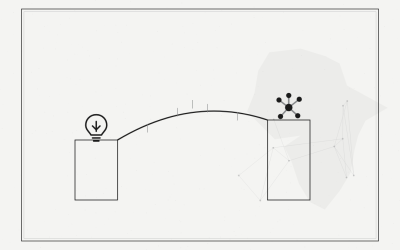
That choice places HPP II inside a hierarchy. Above it sit Vision 2030, the country’s long horizon, and the five-year National Development Plans; below it sit ministries and their budgets. The plan positions itself as the accelerator between them, promising to improve accountability and service delivery rather than to replace the plans it sits among.
The case for a narrow instrument
The theory behind HPP II is that comprehensive plans fail by trying to do everything at once. By deliberately narrowing its scope to a limited set of goals and activities, the plan aims to be deliverable where a fuller agenda would spread effort too thin. Its five pillars – governance, economic advancement, social progression, infrastructure and international relations – each carry a defined and countable list of actions rather than open-ended ambition.
This is planning as triage. The instrument’s value lies not in its breadth but in its restraint: fewer commitments, each specified tightly enough to be tracked. Whether that restraint holds is the whole test, because a targeted plan that quietly widens becomes the comprehensive plan it meant to avoid.
The plan’s discipline is its scope, and its scope is the easiest thing to lose.
Accountability written into the design
The governance pillar shows how seriously the plan takes measurement. It sets a minimum 80 per cent achievement target for public office bearers, ties reporting to structured cycles across public entities, and commits to a second national anti-corruption strategy for the plan’s own period. Delivery, in other words, is meant to be counted rather than asserted.
This is the results-based logic that separates a targeted plan from a manifesto. A narrow instrument only works if someone checks whether the narrow list was done. The 80 per cent bar and the reporting cadence are the plan’s attempt to make its own performance legible, and to make failure visible when it comes.
A targeted plan is only as good as the count it agrees to submit to.
The shadow of the first plan
The framework is not being tested in a vacuum. HPP II follows the 2016 to 2020 plan, and independent commentary at launch was candid that the first plan met few of its headline objectives, from serviced plots to promised housing. That record is the strongest argument both for and against the new design.
For the design, because a tighter, better-monitored plan is a reasonable response to one that overreached. Against it, because the same institutions that missed the first set of targets are being asked to hit the second. The theory is sound; the open question is whether narrowing the plan also narrows the delivery gap.
A better-drawn plan does not automatically become a better-delivered one.
Why the framework matters beyond Namibia
For anyone who studies how states plan, HPP II is a clean case of a particular idea: that a short accelerator plan, nested under a long vision, can move a bureaucracy faster than a comprehensive blueprint. It is a bet on focus over coverage, and on measurement over promise.
The idea is portable, which is what makes it worth watching. If a tightly scoped, closely counted plan can close even part of the distance between vision and delivery, the model travels. If it cannot, the lesson is that the instrument was never the problem, and the constraint lies in execution the framework cannot supply.
The plan tests whether design can fix delivery, or only describe it.
For a policymaker, analyst or planner, HPP II is less a set of projects than a proposition about method: narrow the plan, count the results, and let a short instrument carry a long vision. The decision it invites is whether to judge Namibia’s recovery by the ambition of its targets or by the honesty of the reviews it promises to publish against them.
Sources: The Namibian; Inside HPP II – Pillar One: Effective Governance (New Era); Opinion: The Harambee Prosperity Plan II (New Era)